Why Gut Health Is Central to HS — Not Peripheral to It
Most HS patients focus exclusively on what's happening at the skin. But in many recurring cases, the deeper disruption is in the gut — where impaired digestion, bacterial imbalance, and increased intestinal permeability generate the systemic inflammatory environment that HS depends on to persist.
The Gut Does Far More Than Digest Food
AyurvedaAgnimandya · Ama FormationThe digestive system is the body's largest immune organ. Its function goes well beyond processing meals — it regulates inflammatory signalling, governs nutrient absorption, and maintains a barrier between the gut environment and systemic circulation. When this system is compromised, the effects extend far beyond digestion.
What Gut Dysfunction Actually Means
Gut dysfunction is not simply about digestive discomfort. It describes a state in which the gut's regulatory capacity is diminished — including weakened digestive capacity, microbial imbalance (dysbiosis), and increased permeability of the intestinal lining. Each of these disruptions feeds into the others, creating a self-reinforcing cycle that is difficult to resolve without deliberate, structured intervention.
In patients with HS, gut dysfunction is rarely absent. The inflammatory burden generated by a compromised gut creates a systemic environment that perpetuates lesion formation — even when the skin is treated in isolation. This is one of the primary reasons HS continues to recur despite skin-level interventions.
How This Connects Directly to HS
The gut–skin axis describes the established biological relationship between gut health and skin inflammatory conditions. When the intestinal barrier becomes more permeable, bacterial components and partially metabolised material can enter systemic circulation. This triggers an immune response that manifests — among other places — in the skin, particularly in regions of follicular density and friction where HS commonly occurs.
Gut dysbiosis also depletes the microbial diversity required to produce short-chain fatty acids and other anti-inflammatory metabolites. Without these regulatory compounds, immune responses become exaggerated and poorly modulated — driving the chronic, misfiring inflammation characteristic of HS.
From Gut Disruption to Recurring Skin Lesions — The Internal Chain
HS is not a skin condition that happens to have gut connections. In many cases, gut dysfunction is the engine — with skin lesions being the visible output of a systemic inflammatory process that begins internally.
Digestive Capacity Weakens
When digestive function is impaired — whether due to diet, chronic stress, antibiotic disruption, or other factors — food is incompletely processed. The metabolic byproducts of incomplete digestion begin to accumulate in the gut environment, shifting the internal terrain toward one that promotes microbial imbalance and inflammation.
Microbial Imbalance Develops (Dysbiosis)
A compromised gut environment disrupts the microbial ecosystem. Beneficial bacteria that regulate immunity and produce anti-inflammatory compounds decline, while pro-inflammatory microbial populations increase. This shift amplifies inflammatory signalling at the intestinal level — and systemically, through the bloodstream.
Intestinal Permeability Increases
Dysbiosis and chronic intestinal inflammation weaken the tight junctions of the gut lining. This increased permeability — sometimes referred to as a "leaky gut" — allows bacterial fragments and metabolic material to pass into systemic circulation. The immune system treats these as threats, generating a systemic inflammatory response that becomes chronic and poorly regulated.
Systemic Immune Dysregulation Occurs
The sustained immune activation triggered by gut permeability creates a state of chronic low-grade inflammation throughout the body. Immune signalling becomes dysregulated — with inflammatory cytokines (including TNF-α and IL-1β) elevated persistently. This is the same inflammatory environment that drives follicular blockage and tissue destruction in HS.
HS Lesions Form — and Keep Returning
With chronic systemic inflammation as the baseline, the hair follicles in friction-prone areas become repeatedly susceptible to blockage, rupture, and abscess formation. Even when individual lesions heal, the underlying gut-driven inflammatory burden remains — ensuring that new lesions continue to develop. This is why HS keeps coming back when the gut is not addressed.
In Ayurvedic understanding, the digestive system — governed by the concept of Agni (metabolic and digestive function) — is considered the root of systemic health. When Agni is diminished, metabolic processing becomes incomplete, generating what is described as Ama: accumulated inflammatory material that enters circulation and deposits in susceptible tissues. In HS, this Ama-driven inflammatory load is understood as one of the core sustaining factors — which is why Ayurvedic treatment approaches begin with restoring digestive integrity, not suppressing skin symptoms.
"If it keeps coming back, it means the root cause has not been addressed — and in many HS cases, that root is in the gut."
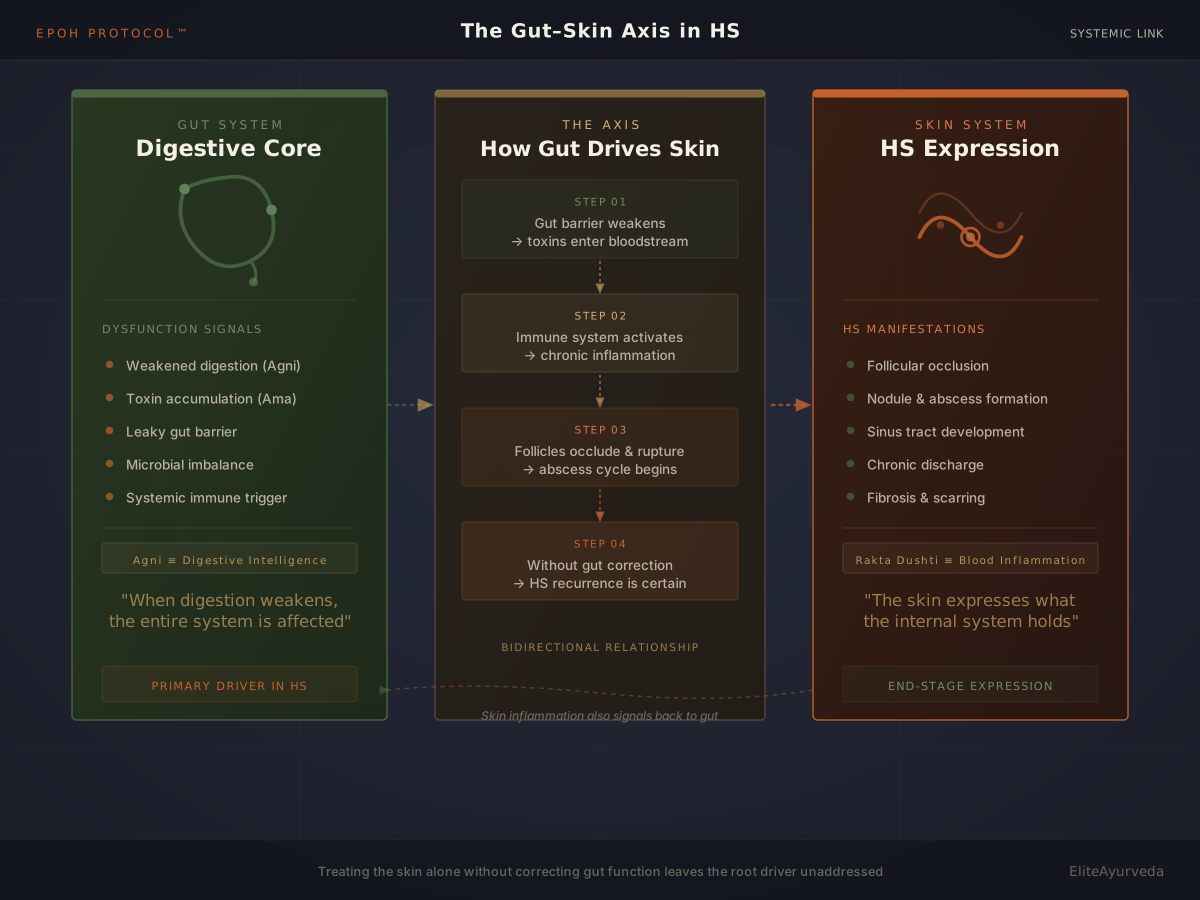
The gut-skin axis — how digestive dysfunction drives recurring skin inflammation in HS
Which HS Patients Show the Strongest Gut Connection?
Gut dysfunction as a driver of HS is not equally visible in every patient — but certain patterns consistently point toward gut involvement as a primary factor sustaining the disease.
Long-Term Antibiotic Users With Persistent Recurrence
Patients who have been on repeated or prolonged antibiotic courses for HS often present with worsened gut dysbiosis and increased flare frequency over time. The antibiotics address the infection component temporarily, but deplete beneficial gut bacteria — accelerating the gut dysfunction that sustains the underlying inflammatory environment.
HS with Concurrent Digestive or Bowel Symptoms
A significant proportion of HS patients also experience digestive complaints — irregular bowel habits, bloating, food intolerances, or diagnosed inflammatory bowel conditions. In these cases, the gut–skin connection is direct. Addressing gut inflammation consistently reduces the frequency and severity of HS flares in this patient group.
Multifocal HS Without Clear Hormonal Driver
When HS involves multiple body regions simultaneously and does not clearly fluctuate with hormonal cycles, gut-driven systemic inflammation is often the primary sustaining factor. The inflammatory load generated by gut dysfunction is diffuse — explaining why lesions develop across different anatomical sites rather than in a single location.
Factors That Deepen Gut Dysfunction in HS
Gut health is not static. Certain inputs — dietary, medical, and lifestyle — consistently worsen gut function in ways that directly amplify HS activity. Understanding these factors helps explain why the condition tends to escalate during particular periods.
High-Glycaemic and Processed Food Diet
Diets high in refined carbohydrates, processed foods, and sugar rapidly shift the gut microbiome toward pro-inflammatory compositions. These foods feed dysbiotic bacteria while depleting beneficial strains — directly worsening the gut environment that sustains HS inflammation.
Repeated Antibiotic Courses
Antibiotics prescribed for HS create a counterproductive cycle: they temporarily reduce infection, but each course depletes gut microbial diversity further. Over time, repeated antibiotic use accelerates dysbiosis and worsens the gut-driven inflammatory burden — increasing recurrence rather than preventing it.
Chronic Psychological Stress
The gut–brain axis means that sustained psychological stress directly alters gut function — reducing digestive capacity, shifting microbial populations, and increasing intestinal permeability. Patients under chronic stress consistently show worsened gut markers alongside increased HS flare frequency.
Irregular Eating Patterns and Sleep Disruption
The gut microbiome operates on circadian rhythms. Irregular meal timing, skipped meals, and disrupted sleep cycles destabilise microbial populations and impair the gut's overnight repair processes. Patients with irregular routines typically show more volatile HS activity than those with consistent daily patterns.
Why Gut Restoration Must Come Before — Not After — Skin Treatment
Addressing the Source of the Inflammatory Load
Correcting gut dysfunction in HS is not about digestive comfort — it is about removing the internal driver of systemic inflammation. When the gut is restored — digestive capacity strengthened, microbial balance improved, intestinal permeability reduced — the inflammatory signal that perpetuates HS lesion formation diminishes. This is why patients who address gut health alongside skin treatment consistently show better long-term outcomes than those who address the skin alone.
Why This Requires Personalised Assessment
Gut dysfunction in HS is not uniform. The specific pattern — whether primarily dysbiosis, permeability, digestive weakness, or metabolic disruption — varies between individuals. A structured assessment identifies which component is most dominant in the individual case, allowing the correction approach to be targeted rather than generic. Without this, gut restoration efforts are often incomplete and the inflammatory driver persists.
How treatment works →How This Cause Connects to the Broader HS Picture
HS causes rarely operate in isolation. When one internal system is disrupted, others tend to follow — which is why effective correction requires understanding how multiple drivers interact in the individual patient.
Understanding Your Gut's Role Is the Starting Point for Lasting Change
A personalised evaluation examines the specific gut-related factors sustaining your HS — digestive capacity, inflammatory load, dietary triggers, and the impact of previous treatment on gut function. If your HS has persisted or worsened despite conventional management, this is one of the most important areas to assess.