HS Does Not Stay the Same — It Follows a Pattern
Hidradenitis Suppurativa progresses in recognisable stages when the underlying drivers are not corrected. Understanding this progression — what changes, why, and at what pace — is the first step toward interrupting it. This page explains how HS evolves over time and what determines whether a case stabilises or worsens.
HS Is Not an Episodic Condition. It Is a Progressive One.
Many patients experience HS as a series of flares — boils that appear, discharge, settle, and return. This pattern can create the impression that the condition is unpredictable or cyclical. In reality, HS follows a largely predictable trajectory when internal drivers remain unaddressed.
Each flare is not a fresh event. It is a continuation of an underlying inflammatory and structural process that does not fully resolve between episodes. Over time, this process deepens — involving more tissue, creating scar formation, and eventually establishing permanent structural changes in the skin and surrounding layers.
Understanding how progression works is not meant to create alarm. It is meant to show why the same treatment that provided temporary relief in Stage 1 will not be sufficient by Stage 3 — and why earlier correction produces fundamentally different outcomes than later intervention.
"When a condition keeps recurring, it usually follows an underlying pattern that needs to be understood and addressed — not suppressed."
Ayurvedic parallel — Samprapti
Ayurveda maps disease progression through the concept of Samprapti — the unfolding of disease along tissue and channel layers as internal imbalance deepens. In HS, this means progressive involvement of the dhatus (tissue systems): beginning in Rasa (lymph and interstitial fluid), moving into Rakta (blood and inflammatory pathways), and eventually reaching Mamsa (muscle and subcutaneous tissue) and Meda (adipose tissue). As each layer is drawn into the disease process, correction becomes more complex — which is precisely why earlier intervention changes outcomes so fundamentally.
What Progression Actually Means
- Early lesions involve reversible inflammation — later lesions involve structural tissue change
- Scar tissue, once formed, permanently alters the local environment
- Sinus tracts are not individual lesions — they are a connected system within the tissue
- Systemic involvement (hormonal, metabolic, immune) intensifies as the condition matures
- The window for correction narrows as structural changes accumulate
- Suppression at one site does not prevent progression at adjacent or new sites
- Progression pace varies significantly by individual — hormonal and metabolic factors determine speed
EPOH-DSS — Four Clinical Stages of HS
Unlike conventional systems, the EPOH model views HS as a progressive pathological spectrum, aligning with classical Ayurvedic disease progression and guiding stage-specific treatment. Early identification of stage allows faster recovery, reduced complications, and a higher chance of long-term remission.
Nodular Swelling Due to Blockage
Small, firm nodules appear in friction-prone areas — underarm, groin, buttocks. Pain is mild or absent. There is no pus, no discharge, and no sinus formation. This is the earliest stage of the disease, where the follicular blockage has begun but the inflammatory cascade has not fully activated.
- Small, firm nodules
- Mild pain or discomfort
- No pus or discharge
- No sinus formation
This is the earliest and most reversible stage. Timely intervention at Stage 1 can prevent disease progression entirely. Internal correction here produces the most complete and lasting outcomes.
Inflammatory Abscess Formation
The blocked follicle becomes actively inflamed. Pain increases significantly. The area becomes red, hot, and swollen. Early pus formation may begin. This stage marks active inflammation — where the immune system is responding intensely to the follicular rupture and bacterial involvement.
- Increased pain
- Redness and local heat
- Swelling becomes prominent
- Early pus formation may begin
Proper management at Stage 2 can prevent abscess rupture and sinus formation. This is the critical window — once the stage advances to sinus formation, treatment complexity increases substantially.
Sinus Tract Wound
A sinus tract forms — a single channel beneath the skin that drains pus. The discharge provides temporary relief, but the tract remains open and the condition recurs at the same site. The disease becomes chronic at this stage. The sinus tract is not a wound that heals spontaneously; it is a structured tissue channel that requires active correction to close.
- Pus discharge
- Formation of sinus tract (single opening)
- Temporary relief after discharge
- Recurrence at same site
Structured treatment is required to close the tract and prevent recurrence. Surface treatment alone will not resolve Stage 3 — the internal inflammatory environment must be addressed simultaneously.
Multiple Channel Sinus Network
Multiple sinus tracts form and interconnect beneath the skin, creating a network of channels. Discharge becomes continuous or recurrent across multiple openings. The overlying skin thickens and becomes fibrotic. In severe cases, movement in the affected area is restricted. This is the most advanced stage, requiring intensive and sustained treatment to reverse chronic pathology.
- Multiple interconnected sinus tracts
- Continuous or recurrent discharge
- Thickened, fibrotic skin
- Restricted movement in affected areas
Intensive and sustained treatment is required. Internal correction must precede any structural intervention — without it, recurrence at excision margins is predictable.
About the EPOH-DSS: The EPOH Dynamic Staging System classifies HS as a progressive pathological spectrum across four clinical stages — Early Nodular, Inflammatory, Sinus, and Advanced Tunneling. Unlike structural-only classification systems, EPOH-DSS aligns with Ayurvedic disease progression (Samprapti) and guides stage-specific treatment decisions. Early identification allows faster recovery, reduced complications, and a higher chance of long-term remission.
The parallel progression — beyond the body
The four stages above describe what changes in the tissue. An equally important progression occurs in daily life. From occasional disruption — an inconvenient boil — the condition advances to lifestyle restriction: specific clothing, limited movement, altered social participation. From there, to identity alteration: the condition begins to shape how the patient sees themselves, what they believe is possible for them, and how they engage with relationships and work.
This parallel progression is not a side effect of HS — it is part of the disease. Treatment that addresses only the tissue without acknowledging this dimension produces incomplete recovery. Both trajectories can be interrupted — and both matter clinically.
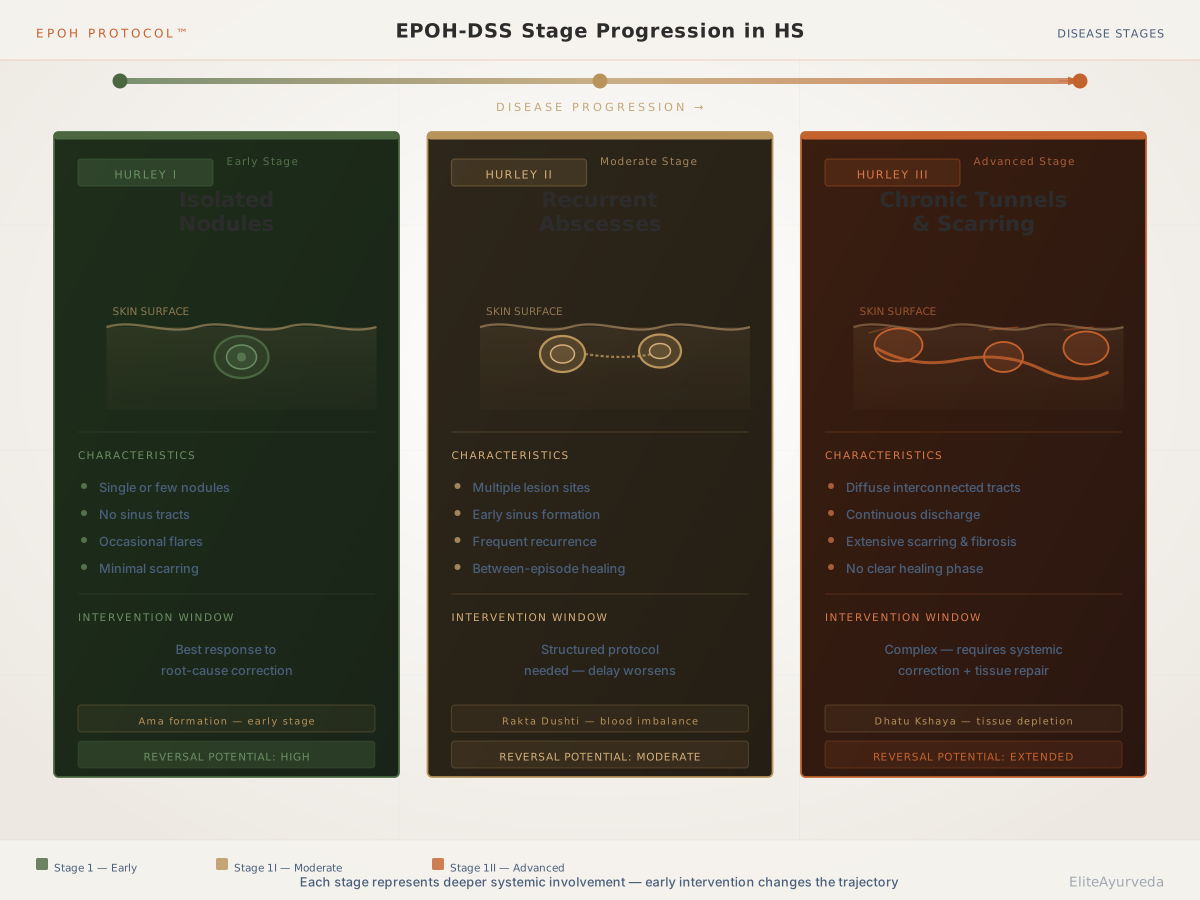
EPOH-DSS stage progression — how HS severity is clinically classified
HS Progresses When These Factors Remain Uncorrected
Structural progression in HS is not random. It is consistently linked to persistent internal imbalances that sustain the inflammatory and follicular environment in which the disease operates.
Sustained Gut Dysfunction
When digestive function is impaired, inflammatory load accumulates systemically. This provides a continuous substrate for immune dysregulation — the inflammation does not resolve between flares because its source has not been corrected.
Uncorrected Hormonal Imbalance
Androgen excess, insulin resistance, and disrupted cortisol patterns directly stimulate follicular activity in HS-prone regions. As long as these imbalances persist, the follicular environment remains susceptible — regardless of what surface treatments are applied.
Immune Dysregulation
In chronic HS, the immune response has been in a state of sustained activation for an extended period. This alters the immune system's calibration — responses become disproportionate, and the cycle of lesion formation becomes self-perpetuating at a biological level.
Repeated Suppression Without Correction
Courses of antibiotics, steroid injections, and surgical excision control active lesions — but do not address the tissue environment producing them. Each episode of suppression followed by recurrence contributes to progressive tissue change.
Lymphatic Stagnation
HS characteristically affects areas of lymphatic concentration — axilla, groin, perianal, inframammary. When lymphatic drainage is compromised, toxin accumulation is localised and persistent, maintaining the conditions for continued lesion activity.
Metabolic and Lifestyle Factors
Obesity, sedentary patterns, poor sleep, and high glycaemic load all independently sustain the inflammatory and hormonal environment that drives HS. These are not secondary factors — in many cases they are primary amplifiers of disease severity and progression pace.
Why HS Deepens Rather Than Resolves
At the core of HS progression is a feedback loop between internal inflammation and local tissue response. Each inflammatory episode leaves behind microscopic changes — altered follicular architecture, micro-scarring, modified immune signalling — that make the same site more susceptible to subsequent episodes.
The Tissue Memory Problem
Skin and subcutaneous tissue that has experienced repeated inflammation develops a form of cellular memory. The immune cells resident in that tissue become sensitised — they respond more readily, and more intensely, to stimuli that would previously have been tolerated. This is why HS lesions preferentially recur at the same locations, and why those locations tend to worsen over time while new sites begin to mirror the same pattern.
The Structural Entrenchment Problem
Sinus tracts are not simply channels in the skin — they are epithelialised structures lined with their own cellular environment. Once formed, they are not easily resolved through suppression alone. They represent a permanent structural change that sustains discharge and creates a reservoir for continued inflammatory activity. This is why Stage 3 cases require a fundamentally different approach than Stage 1.
The Systemic Amplification Problem
As HS persists, its effects on the wider hormonal and metabolic system become more pronounced. Elevated systemic inflammation affects insulin sensitivity, cortisol regulation, and androgen metabolism — all of which, in turn, feed back into the local disease environment. This is not a linear process; it is a progressively tightening cycle. HS is not a skin problem. It is a systemic inflammatory condition expressing through the skin.
Why Suppression Accelerates Progression
When suppression is applied without addressing the internal environment — antibiotics reduce bacterial load, steroids reduce acute inflammation, surgery removes tissue — the underlying drivers remain active. Between treatments, those drivers continue operating. The net result is that each treatment episode provides diminishing returns, while the structural and systemic picture continues to advance. Unless the underlying causes are addressed, the condition may continue to recur despite treatment.
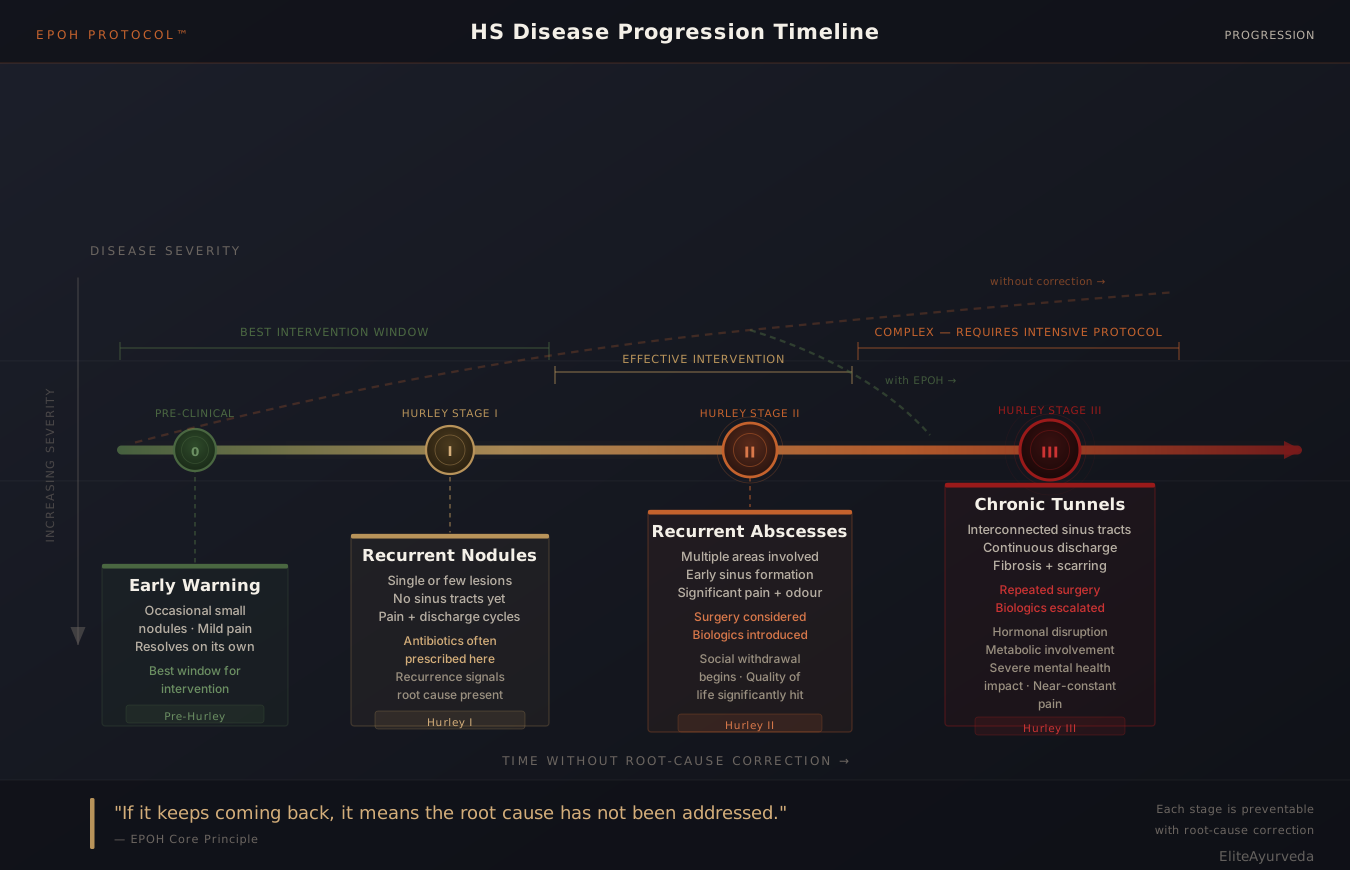
Disease progression timeline — how HS evolves when internal drivers remain unaddressed
Progression Is Not Inevitable — But Correction Must Be Systematic
The same mechanisms that drive progression when uncorrected can be interrupted when addressed systematically. The goal is not to manage each flare in isolation — it is to change the internal environment so that flares become progressively less frequent, less severe, and ultimately absent.
This requires addressing each layer of the disease simultaneously — not sequentially applying treatments that each target one dimension while leaving others active.
-
01
Gut and inflammatory load correction Reducing the systemic inflammatory substrate removes the fuel that sustains follicular and immune dysregulation between flares.
-
02
Hormonal and metabolic stabilisation Correcting androgen excess, insulin resistance, and related endocrine imbalances directly reduces the follicular stimulus in HS-prone regions.
-
03
Tissue repair support Structured formulations that support tissue integrity, reduce fibrotic progression, and assist lymphatic drainage address the structural dimension of the disease.
-
04
Recurrence prevention Stabilising immunity and lifestyle factors creates the conditions under which the corrected internal environment is maintained long-term.
Understanding Your Stage Is the Starting Point
Progression in HS is not a fixed outcome. The internal drivers that sustain it can be identified and corrected through a structured, personalised approach. A clinical evaluation identifies where in the progression pattern your case currently sits — and what a systematic correction looks like for your specific presentation.
Patient Tools